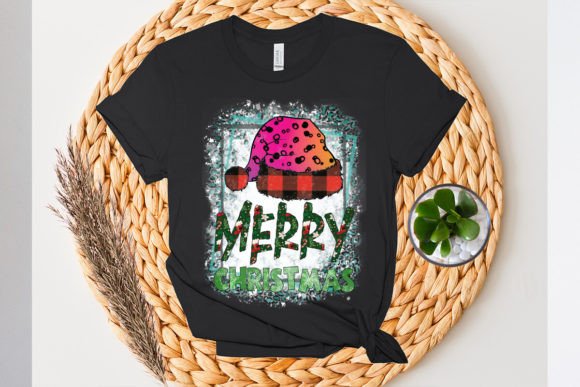
Merry Christmas Sublimation: A Designer’s Real-World Review
As an embroidery designer who has spent countless hours digitizing and testing artwork for client projects, I approach every new asset with a critical eye. We often see bundles labeled as T-Shirt Designs or general Graphics, but the real question is always the same: how does this translate to thread? Today, I am evaluating the Merry Christmas Sublimation design from Trendy Pod. While the product description highlights its utility for sublimation printing, my focus is on its potential and limitations when adapted for machine embroidery, custom apparel, and handmade holiday products.
First Impressions and Visual Personality
The first thing that strikes me about the Merry Christmas Sublimation asset is its clean, modern aesthetic. It avoids the cluttered, overly complex details that often plague holiday graphics. For an embroidery project, simplicity is a virtue. Complex gradients and tiny text in a PNG file do not automatically translate to a clean stitch file, but a strong underlying shape does. This design features bold lines and distinct color separation, which suggests it could be successfully converted into a machine embroidery design with careful digitizing.
The mood is festive yet sophisticated. It does not scream "novelty"; instead, it whispers "boutique quality." This visual personality makes it ideal for sellers who want to move beyond cheap, mass-produced holiday items. Whether you are creating a personalized gift for a family member or stocking your Etsy shop with premium seasonal goods, the layout feels balanced. The spacing between elements allows for breathability in the stitching, which is crucial for maintaining fabric drape and comfort.
Real-World Application: From Concept to Stitch
To test the viability of this design, I imagined a specific real-life scenario: preparing a custom embroidered tote bag for a local holiday market. Tote bags are typically made from canvas or heavy cotton, fabrics that can handle higher stitch density but require precise stabilization. If I were to convert this Merry Christmas Sublimation graphic into an embroidery file, I would likely use a combination of satin stitch for the text and fill stitch for any solid graphical elements.
The provided files include high-resolution PNGs at 300 dpi in various colorways (color, white, black) and an EPS file. The EPS file is particularly valuable here. As a designer, I would import the EPS into my digitizing software to trace the shapes accurately. This ensures that the curves remain smooth and the corners are sharp, avoiding the jagged edges that can occur when tracing low-quality raster images. For a sweatshirt embroidery project, this precision is vital. A fuzzy, ill-defined logo on a fleece hoodie looks unprofessional, whereas a crisp, well-digitized design elevates the perceived value of the garment.
Beyond apparel, consider this design for home decor. A pillow cover or kitchen towel featuring this motif could become a staple holiday item. However, the application changes based on the substrate. On a textured fabric like a waffle-weave towel, I would need to adjust the stitch density to prevent the fabric from puckering. The transparency of the PNG files allows for easy mockups, helping me visualize how the design sits on different background colors before I even thread the needle.
Navigating Technical Challenges and Fabric Constraints
While the design is visually appealing, there are areas where caution is necessary. The product description mentions "3 Color, 3 White, 3 Black" variations. When working with dark fabric, such as a navy blue cap or a black apron, using the white version of the design is essential for contrast. However, stitching white thread on dark fabric requires careful attention to underlay stitches to prevent the background fabric from showing through the top stitching. I recommend using a dense underlay or a backing stabilizer that matches the thread color to create a solid foundation.
Another consideration is the hoop size. The design is print-ready at 15 inches and 18 inches, which is quite large for standard home embroidery machines. Most hobbyists work with 4x4 or 5x7 hoops. If you plan to use this for baby embroidery on a onesie, you will need to scale the design down significantly. This is where the vector nature of the EPS file becomes critical. Scaling a PNG down can result in pixelation and loss of detail, making small text unreadable. Always check the legibility of tiny lettering after resizing. If the text becomes too small, the satin stitches may merge, creating a bulky, messy appearance.
For stretchy fabrics like those used in t-shirts or baby clothes, proper stabilizer selection is non-negotiable. A cut-away stabilizer is usually best for garments that will be washed frequently, ensuring the design retains its shape over time. Without it, the pull of the thread can distort the fabric, ruining the finished product.
Commercial Viability and Brand Consistency
For small business owners and craft entrepreneurs, the commercial potential of Merry Christmas Sublimation lies in its versatility. It fits seamlessly into a brand identity that values clean lines and modern holiday cheer. Using this design across multiple products—such as an embroidered patch for a jacket, a tote bag design for shoppers, and a matching sweatshirt embroidery for a family set—creates a cohesive collection. This consistency builds customer trust and encourages larger purchases.
However, before selling any finished items, you must verify the licensing terms. The bundle includes digital assets, but rights for commercial embroidery can vary. Ensure that converting this sublimation graphic into a machine embroidery design for sale is permitted under the specific license provided by Trendy Pod. Never assume that because a file is included, it is free for unrestricted commercial use in all formats.
Practical Designer Notes for Best Results
To get the most out of this asset, follow these practical steps:
- Test on Scrap Fabric: Always run a test stitch-out on the actual fabric you intend to use. This reveals issues with tension, density, and registration before you commit to a final product.
- Check Thread Color Contrast: Use the black and white PNG previews to simulate how the design will look on different fabric shades. High contrast is key for readability.
- Review Stitch Density: If digitizing yourself, avoid excessive overlap in fill areas. Too much density can cause thread breaks and fabric distortion.
- Inspect Small Details: Zoom in on the EPS file to ensure no anchor points are misplaced. Clean vectors lead to clean stitches.
- Confirm Hoop Size: Ensure your machine can accommodate the scaled size of the design. If splitting the design into multiple hoops, plan the alignment carefully.
In conclusion, Merry Christmas Sublimation is a strong starting point for holiday creativity. While it is marketed as a sublimation graphic, its clean structure and professional presentation make it a viable candidate for embroidery adaptation. With careful digitizing, appropriate stabilizer use, and attention to fabric constraints, this design can elevate your handmade products from simple crafts to professional-grade merchandise. Whether you are an experienced decorator or a hobbyist looking to expand your holiday offerings, this asset offers the flexibility needed to create memorable, high-quality embroidered items.